Vietnam’s e-commerce market continues to grow rapidly, reaching around US$31 billion in 2025, with further growth expected as online shopping, digital payments and cross-border commerce expand. For foreign investors, this creates significant opportunities, but entering the market also requires a clear understanding of Vietnam’s investment, licensing and e-commerce regulations.
The regulatory framework has also changed in 2026, with Vietnam’s new E-Commerce Law and supporting regulations introducing updated requirements for businesses and digital platforms. This guide explains the key e-commerce models, FDI registration process, business licences and compliance requirements foreign investors should consider when establishing an e-commerce business in Vietnam.
This guide explains how foreign investors can establish an e-commerce business in Vietnam, covering company formation, licensing, the 2026 e-commerce regulatory framework and key operational requirements.
Types of E-Commerce Activities in Vietnam
Before entering Vietnam’s e-commerce market, businesses should understand the main operating models, as each can involve different licensing, operational and compliance requirements.
-
Online Retail Market: A business sells its own products directly to customers through a website, app or other digital channel. This model gives the business more control over inventory, pricing, payments and fulfilment, but also places greater responsibility on the company to manage the full sales process.
-
Online Marketplaces: Digital platforms that bring multiple vendors with consumers under one virtual roof. In Vietnam, platforms such as Shopee, TikTok Shop, Lazada and Tiki are among the main marketplace channels, offering consumers a wide range of products while giving sellers access to established payment, delivery and promotional systems.
- Online Classifieds: Peer-to-peer trading platforms where sellers list products directly to potential buyers. Unlike traditional marketplaces, these platforms focus on connecting parties while leaving payment and delivery arrangements to the users themselves. This model gives sellers complete control over their listings and transaction terms.
How Do You Register an FDI E-Commerce Company in Vietnam?
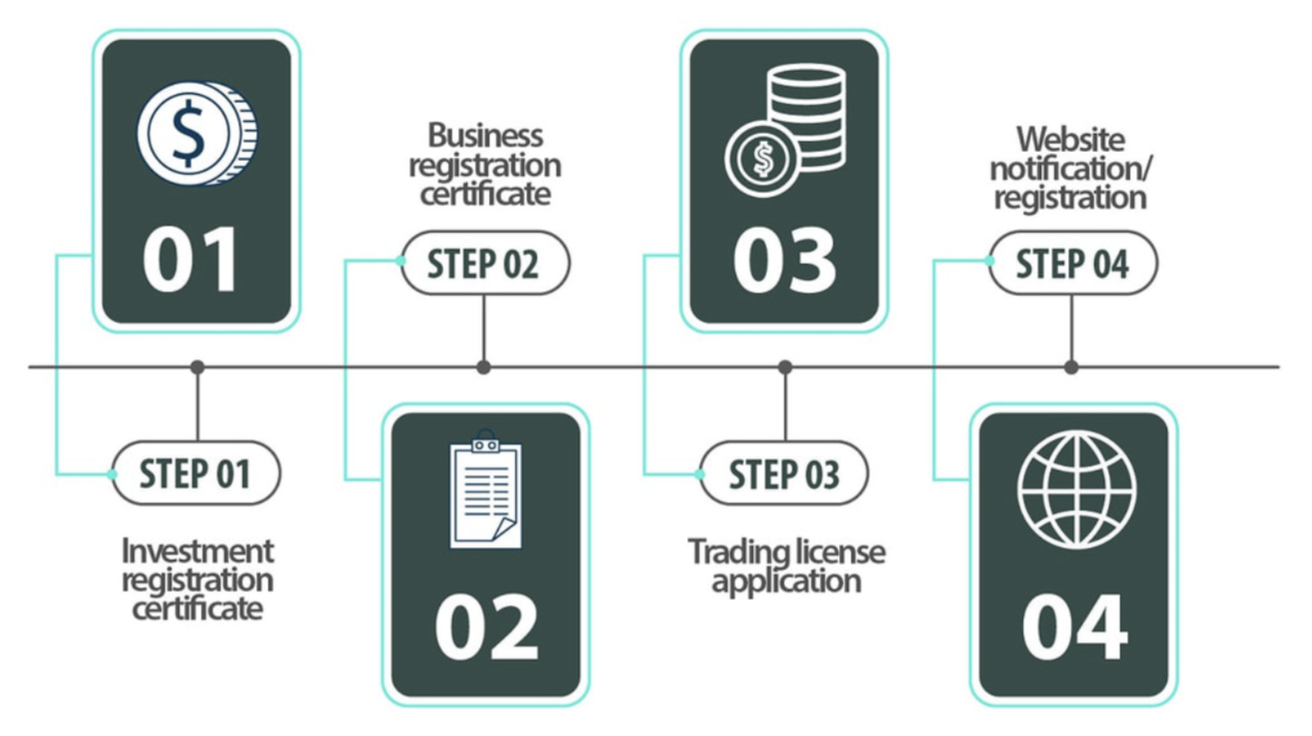
Setting up a foreign-invested e-commerce company in Vietnam involves both enterprise and investment registration, followed by any licences or approvals required for the planned activities. Under the 2026 framework, foreign investors have more flexibility in how the ERC and IRC procedures are completed.
1. Investment Registration Certificate (IRC) Application: The initial phase requires obtaining an IRC from the Department of Planning and Investment (DPI). Investors must submit:
- Investment Project Proposal detailing the project, investment capital, and business objectives
- Legal documents of the investor, such as a passport or business registration certificate
- Financial capacity documentation demonstrating the ability to support the business
2. Enterprise Registration Certificate (ERC) Application: The ERC formally establishes the company as a legal entity in Vietnam. Depending on the investment route, it may be obtained before or after the IRC.
Required documentation includes:
- Application Form detailing the company name, address, and charter capital.
- Company Charter outlining the organizational structure and operations.
- Documents for Founding Shareholders providing information on shareholders and their contributions.
- Beneficial ownership information, where required.
3. E-commerce Website Registration with Ministry of Industry and Trade: The final phase involves registering the e-commerce platform through MOIT's system:
- Step 1: Create an account in the online system by providing:
- Name of applicant
- Certificate of incorporation number
- Business lines
- The head office address of the applicant
- Contact information
- Step 2: Upon verification of adequate information, MOIT grants access to the online system. Applicants can then log on to register their e-commerce website or application and complete the required forms.
- Step 3: After MOIT approves the submission, applicants must send an original registration dossier to MOIT.
- Step 4: Upon verification, MOIT issues an official code for displaying the 'registered' sign on the e-commerce website or app.
Additional Requirements:
- Platform Information and Consumer Compliance:
- Provide complete website information, including domain name, business activities, and management contact details.
- Privacy information and procedures for handling customer complaints
- Clear pricing, payment, delivery, return and refund policies.
- Transparent information about products, services and the parties involved in a transaction
- Post-Registration Requirements:
- After obtaining IRC and ERC, the FDI company must apply for additional business licenses based on their conditional activities or operations.
- Maintain ongoing compliance with relevant regulations and guidelines.
What Business Licences Are Required for E-Commerce in Vietnam?
Foreign investors establishing an e-commerce business in Vietnam may need several registrations, licences and approvals, depending on the business model and activities involved.
1. Investment Registration Certificate (IRC)
The IRC serves as your official permission to invest and conduct business activities in Vietnam's e-commerce sector. This certificate is obtained from the Ministry of Planning and Investment (MPI) in your intended province of operation.
Key Aspects of IRC Application:
- Submit a detailed business plan
- Specify investment capital
- Outline the chosen business structure
- Demonstrate compliance with Vietnamese regulations
The MPI will thoroughly review your application to ensure alignment with local regulations. Working with a Vietnamese business law specialist can help ensure a smooth approval process.
2. Enterprise Registration Certificate (ERC)
After securing the IRC, you must obtain the ERC, which serves as your official business license. This certificate is issued by the Enterprise Registration Office (ERO) in the same province as your IRC.
Required Documents for ERC:
- Company Charter (including company name, purpose, management structure, and ownership details)
- Proof of physical address in Vietnam (lease agreement or ownership documents)
- Evidence of Initial Capital Contribution
- Details and legal documents of the owner, members or founding shareholders
- Beneficial ownership information, where required
The ERC process is typically faster than the IRC application, but its importance cannot be understated as it is essential for legal operation.
3. E-Commerce Platform Notification or Registration
The requirement depends on how the e-commerce platform operates. Under the 2026 framework:
- Direct-selling platforms with online ordering functions generally require notification before launch.
- Online marketplaces, e-commerce social networks and integrated platforms require registration confirmation from the Ministry of Industry and Trade.
- Businesses must provide the required company, platform and operating information as part of the application.
The appropriate procedure should be confirmed based on the platform model and activities before operations begin.
4. Additional Industry-Specific Licences
Depending on your business activities and products, you may need additional specialized licenses:
Product-Specific Licenses:
- Food Safety Certificate (for food products)
- Import Licenses (for imported goods)
- Special Business Licenses (for alcohol, tobacco, etc.)
Industry-Specific Requirements:
- Healthcare services licenses
- Financial services permit
- Other sector-specific authorizations
5. Compliance Requirements
Data Privacy and Security:
- Adherence to the Law on Cybersecurity
- Implementation of personal data protection measures
- Compliance with data localization requirements (storing certain data on servers in Vietnam)
- User notification protocols for data collection practices
Consumer Protection Standards:
- Clear communication of consumer rights and obligations
- Transparent product and service information
- Implementation of refund policies
- Establishment of dispute resolution procedures
Important Considerations
- Professional Guidance: Consider working with legal experts familiar with Vietnamese business law to ensure complete compliance and smooth license acquisition.
- Compliance risks: Operating without required licenses can result in:
- Financial penalties
- Product seizures
- Potential business closure
- Reputational damage
- Timeline Management: Plan for adequate time to obtain all necessary licenses and permits before commencing operations.
- Documentation: Keep accurate and up-to-date records of all licenses, permits, and compliance documents.
Meeting the right licensing and compliance requirements from the outset can help reduce delays, avoid regulatory issues and support a smoother launch in Vietnam’s e-commerce market.
What Are the Key Requirements for an FDI E-Commerce Company in Vietnam?
Foreign Ownership Structure
E-commerce services in Vietnam occupy a unique position in the country's regulatory framework. Although these services are not explicitly defined in Vietnam’s WTO commitments on services or local regulations, this creates a favorable environment for foreign investors.
The following points highlight key aspects that support this favorable environment for FDI in e-commerce:
- Neither Vietnam's WTO Commitments nor domestic legislation explicitly restricts foreign investment in e-commerce
- Managing and operating an online marketplace, e-commerce social network or integrated e-commerce platform is treated as a conditional market-access activity.
- Foreign investors may establish wholly foreign-owned enterprises (100% foreign ownership) in the e-commerce sector.
- Businesses carrying out retail, distribution or other regulated activities may also need to meet separate licensing requirements.
Capital Requirements
Vietnamese law does not set a specific minimum investment capital for FDI companies engaging in e-commerce services. However, investors should note:
- Investment capital is assessed on a requirements are determined case-by-case basis, based on the scope and scale of the project.
- Capital contributions can be made through multiple channels:
- Direct cash investments
- Fixed asset contributions
- A combination of both cash and fixed assets
When planning investment capital, the key consideration should be ensuring it aligns appropriately with the proposed business operations and scale of the e-commerce venture. This flexible approach allows investors to structure their investments according to their business plans while maintaining compliance with Vietnamese regulations.
Legal Representative Requirements for an E-Commerce Company
Residency Requirements
The company's legal representative must meet the applicable residence requirements in Vietnam. This may include:
- Being physically present in Vietnam for at least 183 days per year, or
- Possession of a valid temporary residence permit.
Flexibility for Foreign Representatives
A foreign legal representative may use a power of attorney arrangement to delegate certain responsibilities when they are not physically present in Vietnam.
Tax Obligations
Legal representatives who maintain residency in Vietnam must fulfill specific tax obligations:
- Annual income reporting to Vietnamese tax authorities
- Payment of applicable taxes on their Vietnam-sourced income
These arrangements can give foreign investors greater flexibility in managing the company while still meeting local representation and compliance requirements.
Key Challenges for Foreign E-Commerce Businesses in Vietnam
Vietnam’s e-commerce market offers strong opportunities for foreign investors, but entering and operating in the market also comes with regulatory, licensing and competitive challenges.
Challenges for Foreign Investors:
- Evolving Regulatory Framework: Changes to e-commerce licensing, tax and data protection requirements can affect how businesses operate. Foreign investors need to keep their compliance processes up to date as the regulatory framework develops.
- Licensing and Registration Procedures: The process of securing necessary licenses and registrations for e-commerce activities in Vietnam can be complex and time-intensive, often requiring specialized expertise.
- Data Privacy and Localization: E-commerce businesses must manage personal data in line with Vietnam’s data protection and cybersecurity requirements. This can require clear policies and appropriate systems for collecting, storing and using customer information.
- Competitive Market Landscape: Vietnam's e-commerce market is highly competitive. Understanding consumer behaviour and building a clear market entry strategy can help new businesses position themselves more effectively.
Conclusion
Setting up an e-commerce business in Vietnam can offer strong growth potential, but foreign investors need to get the structure, licensing and compliance requirements right from the start. The process can involve company registration, e-commerce approvals, data protection requirements, consumer rules and ongoing tax and regulatory obligations. Understanding how these requirements apply to your business model can help reduce delays and support a smoother market entry.
If you are planning to establish or expand an e-commerce business in Vietnam, Ascentium can support you with company setup, licensing, regulatory compliance and market entry planning. We help you understand the requirements, prepare the right documentation and manage the key steps needed to get your business operating in Vietnam.