






























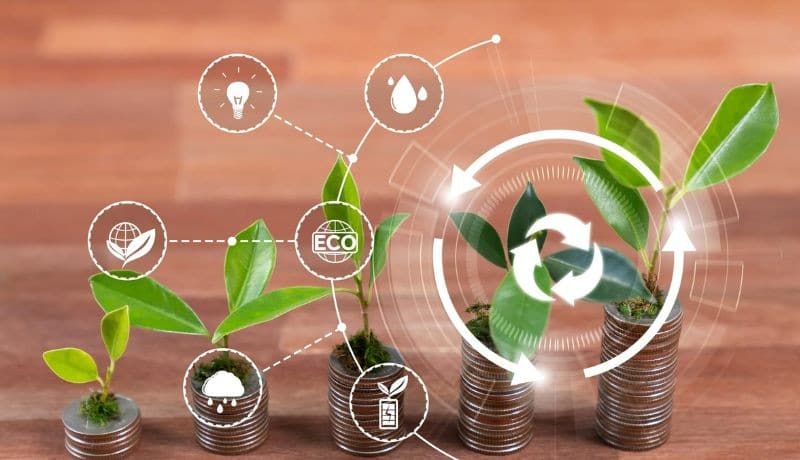
Globally green credits are emerging as a critical mechanism for achieving corporate sustainability goals. These credits offer companies the opportunity to accelerate decarbonization, demonstrate strong leadership roles, and offset their residual emissions in a practical and market efficient manner. Although the landscape for investors and stakeholders is highly complex and rigid, the green credit initiative can help companies attain their net zero or decarbonization targets efficiently by bridging the gap between real ground scenario and their over-arched climate goals.
Green Credits Initiative: A Key Enabler Vital for Corporate Decarbonization Initiatives
Green credits are also called carbon credits. These credits are a form of reward given to companies/organizations that make positive environmental impact through various initiatives. They act as a measure for calculating greenhouse gas emissions reductions or removal from the atmosphere by the company responsibly. By acquiring these credits, companies can claim various environment benefits from activities including afforestation, forest protection, resource conservation, water and waste reduction, renewable energy generation, or setting up emission capture technology. These credits are authentic and undergo rigorous validation, verification and certification procedures by accredited third party organizations. They aid companies to disclose their emissions and respective green credits generated in a more accountable, transparent, and responsible manner.
Key Reasons Why Green Credits are Vital for Decarbonization
Reduce Internal Emission Reductions
Green credits enable companies to offset any indirect or residual emissions from the atmosphere and avoid their internal emissions in a responsible manner.
Aligning With Legal and Market Compliance
Globally green credits are recognized as a strong instrument under the climate actions market. Investors, stakeholders, as well as customers expect companies to provide credible evidence of emissions being reduced through this unique mitigation strategy.
Strong Company Reputation and Better Access to Markets
The credits aid in transparently disclosing their set climate actions, leadership goals, and overall company commitment while offering them better positions in the marketplace.
Attracting Green Investment
Introducing sustainable projects like green buildings, waste management, or nature-based solutions potentially attracts more green investors towards the company, accelerating overall transition to lower carbon economy. The current global market scenario highlights the vitality of these credits in unlocking green investment and international business opportunities.
Present Marketplace for Green Credits
The green credits market is dynamic and is continuously evolving across the globe due to the devastating impact of climate change being witnessed by countries globally. The rising levels of greenhouse gases have made these green credits vital for exchanging emissions amongst various government and non-government entities.
The two main markets of green credit that exist currently are as follows:
1. Voluntary Market
A voluntary market is when an entity purchases green credit voluntarily to meet their in-house sustainability targets for achieving their set Corporate Social Responsibility (CSR) and corporate sustainability goals or to gain ESG investments. The market for such credits is growing rapidly across the globe with more strict frameworks and verifications in place.
2. Compliance Market
These markets are established as per the standards of the European Union Emissions Trading System (EU ETS). They are mandatory, regulated legally by government entities to support companies or industries to comply with obligations and reduce their emissions by gaining these green credits.
In India, the utilization and market of green credits is expanding exponentially. The government has introduced many policies, frameworks, as well as green credit scheme to promote the utilization of certificates for energy efficiency, renewable energy, waste management, etc. These frameworks are aligned with the global set framework for the carbon market. The integration and interdependence of green credits with sustainability frameworks, green finance and policies is expanding worldwide. Companies in India as well as globally are willingly working towards leveraging these credits into their sustainability and decarbonization strategy as these credits comply with the global standards including CDP, SEBI’s BRSR and GRI.
How Can These Credits Be Effectively Used by Companies?
Green credits must be strategically integrated into the company’s long-term sustainability goals and climate action plans. These credits can be utilized in a way that leads to benefiting the organization.
Setting Clear Objectives/Goals
Companies must clearly define their emissions reduction target areas, which category they are addressing- Scope 1, Scope 2 or Scope 3. This way they can align their credits with reporting frameworks and market expectations, enhancing their credibility. Also, these targets will help them prioritize their efforts and ensure effectiveness and transparency. Reducing in-house emissions of the company should be the priority for incorporating energy efficiency, renewable energy, waste management, circular economy, nature-based solutions, community-based initiatives, etc.
Building Strong Financial Plans and Purchasing Verifies Credits
Green credits investments can be used to finance a variety of sustainable projects around green infrastructure, renewable energy, etc. Along with it, purchasing credits from sources that are reliable, credible and authentic is highly valued to ensure transparency, accountability and integrity in the system.
Stakeholders’ Engagement

Related Read: Empowering Businesses Through ESG Training
Transparently disclosing credits to the customers, stakeholders, investors, or suppliers will build trust, loyalty, and the company’s reputation. Maintaining transparency and consistency across the value chain fosters strong relationships and partnerships.
Transparent Reporting and Disclosure
Reporting must align with globally set standards, and disclosure should be made in compliance with frameworks such as TCFD, CDP, BRSR, GRI, etc., to enhance transparency and accountability of companies.
Incorporating green credits into companies’ long term decarbonization goals can aid them in scaling internal programs, risk management, enhance resilience, and reduce overall financial losses. Green credits are a powerful tool for companies to reduce greenhouse gas emissions while aligning with strict climate regulations and market expectations.
How is Green Credit Scheme Implemented in India?
In India, green credits scheme was passed by the government on October 12, 2023 under the Environment Protection Act, 1986. It is a measure through which voluntary plantation activities were encouraged across the country. The green credit scheme supported companies to utilize the degraded land through afforestation activities and get awarded with green credits. These issued credits act as a key incentive for companies to engage in plantation initiatives by following specified methodology and set guidelines by the administrator. The forest department is the implementing agency in India for tree plantation initiatives and is responsible for identifying suitable plantation blocks to carry out the afforestation activity within a stipulated period.
Various organizations and institutions can apply for these credits including government institutions, non-government organizations, private companies, individuals or philanthropies under societies registration act to opt a plantation block for encouraging afforestation activities. The entire process of credit registration, provision, verification, and monitoring has been streamlined through technology-based tools to ensure a seamless process. The earned green credits can be utilized by companies under ESG leadership indicators, or CSR initiatives.
Green credits can support companies to achieve their net zero/decarbonization goals. Robust actions across the supply chain are required to achieve set goals. The credits act as a bridge between net zero goals and emissions reduction targets. They allow businesses to responsibly reduce their residual emissions and allow them to take accountability for their actions. Enhancing transparency and credibility can help mitigate the risks of greenwashing and build trust amongst the stakeholders involved. Aligning these targets with global standards and frameworks make them verifiable and measurable. These credits attract green investments, ESG funds, sustainability-related loans, crucial for companies to transition to net zero.
Effective utilization of credits can accelerate companies’ journey to corporate sustainability, lower-carbon and efficient future. Active suppliers’ engagement and collaboration can boost companies’ ESG performance and market reputation. Green credits are dynamic and ever evolving, navigating companies through the complex regulatory and market structure. They help businesses responsibly reduce their emissions, attract green investments, raise funds, and meet the stakeholders’ expectations. Taking proactive measures will lead to smooth transitioning, competitive advantage, and unlocking growth opportunities for companies. Transparency, accountability, and alignment with global frameworks such as TCFD, CDP, and BRSR must be ensured for meeting the decarbonization targets of the company.
Why Choose InCorp Global?
InCorp provides advisory services for assisting companies in developing strategies for acquiring green credits in compliance with set protocols and standards. Strong strategy development, reporting, and implementation will be supported by their experienced team-aided companies gaining green finance and good market reputation. By choosing InCorp, businesses acquire a reliable partner with a proven track record of assisting businesses in effectively achieving their net zero targets and ESG objectives, as well as gaining technical expertise from industry experts. To learn more about our services, you can write to us at info@incorpadvisory.in or WhatsApp us on (+91) 77380 66622.
Authored by:
Deeksha Modgil | ESG
FAQs
Green credits help companies offset residual emissions that are hard to reduce immediately, providing a bridging mechanism while they scale up internal emission reduction and climate innovations.
Certified activities include afforestation, renewable energy generation, forest conservation, waste management, methane capture, energy efficiency, water conservation, and other verified greenhouse gas reduction projects.
Credits undergo rigorous third-party validation, verification, and certification processes according to established standards to ensure transparency, authenticity, and measurable environmental impact.
Yes, integrating green credits into broader ESG strategies enhances disclosure transparency, improves ESG ratings, engages stakeholders, and attracts green finance opportunities.
The Ministry of Environment, Forest and Climate Change (MoEFCC) governs the programme, with the Indian Council of Forestry Research and Education (ICFRE) acting as the administrator responsible for implementation and monitoring.
Companies can register online via the GCP portal, select registered degraded forest lands for afforestation or other eligible activities, execute projects, and undergo verification to earn tradable green credits.
GCAs are registered entities such as government bodies, NGOs, companies, philanthropists, and individuals who apply to participate in the programme by selecting land blocks for plantation and seeking Green Credits.
Green Credits can be used to offset environmental compliance requirements such as Compensatory Afforestation, can enhance ESG and CSR reporting, and earn recognition for corporate sustainability leadership.
State Forest Departments identify eligible degraded forest lands, carry out plantation activities, monitor progress, and maintain plantations as part of the programme’s implementation framework.
Yes, once issued, green credits can be traded on a dedicated digital platform, enabling companies to buy, sell, or retire credits to meet environmental compliance or voluntary sustainability goals.
Calculations depend on factors like tree species, area of plantation, project duration, and scale of environmental benefits, based on scientifically developed methodologies.
Early adopters gain competitive advantage through enhanced ESG credentials, easier regulatory compliance, improved access to green finance, and recognition as sustainability leaders.
For more details, visit the official Ministry of Environment, Forest and Climate Change (MoEF&CC) Green Credit Programme portal or contact the Indian Council of Forestry Research and Education (ICFRE).