



















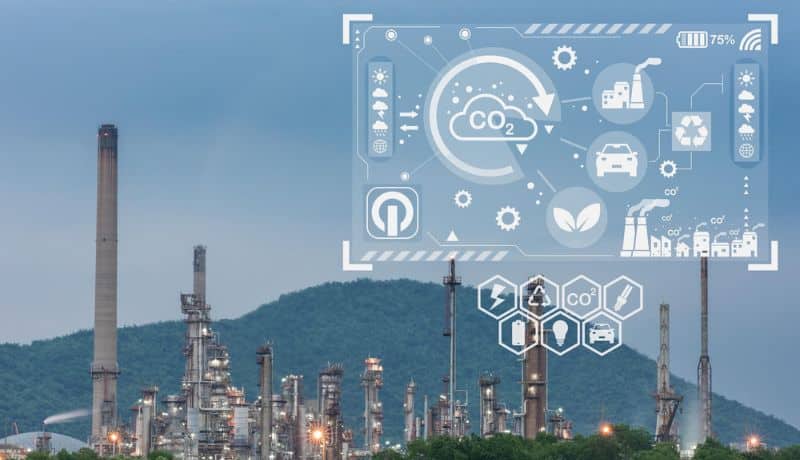
India’s current steel production makes it the second largest steel manufacturer globally, with annual CO2 emissions from steelmaking around 240 MT and further expected to double by 2030 (IEEFA, 2023) due to rising demand of infrastructure and industries. The Indian steel industry is the backbone for other industries, while significantly contributing to total greenhouse gas emissions. The industry comprises nearly 2% of gross domestic steel production of the country and releases around 10-12% of India’s total CO2 emissions, with an emission intensity of around 2.55 tCO2/tonne of crude steel compared to the global average emission intensity of 1.85 tCO2/tcs (IEEFA, 2023).
The growth of Steel Sector is vital for overall development of Indian economy including infrastructure, automotive, manufacturing, and construction sector. The trajectory is further escalated by mass urbanization, consumption, and global demand. Indian steel industry is a mix of large integrated steel plants and smaller secondary manufacturers with the per-capita steel consumption of 74.7 kg, compared to the world average of 229 kg, showcasing immense scope of growth.
Decarbonization of Indian Steel Sector
For Indian steel industry, sustainability and decarbonization are critical to meet the global commitments and India’s pledge to cut their carbon emissions intensity. India’s net zero emissions reduction target is 2070, aiming to reduce emissions intensity from 2.65 to 2.20tCO2/tonnes of finished steel by 2029-30. India recently updated its nationally determined contributions and is targeting a 45% reduction in emission intensity of its GDP by 2030 from 2005 levels*. Major drivers of decarbonization are national and international climate commitments such as national steel policy, net zero targets, Paris agreements, and CBAM regulations.
The sector is facing significant challenges from rising energy costs, heavy dependence on fossil fuels, higher emission intensity, exposure to global regulatory shifts and stakeholders’ pressure. Hence, shifting towards Green Steel or low carbon steel is crucial to ensuring long term competitiveness in import-export markets.
Indian Green Steel taxonomy, an official framework defining what qualifies as ‘Green Steel’ in the country, was launched by the Ministry of Steel in 2024. Indian Green Steel taxonomy formally classifies Green Steel-based carbon emissions per tonne of finished steel along with the thresholds and star-rating systems.
Guiding Frameworks Driving the Steel Industry’s Green Transition
SBTi launched the Steel Science-Based Target-Setting Guidance to provide detailed methodology for setting science-based emission reduction targets for steel industry. It is the world’s first framework for companies in the sector and other companies that heavily use steel to set targets aligned with 1.5°C near-term and long-term targets.
The International Energy Agency (IEA) report ‘Iron and Steel Technology Roadmap– Towards more sustainable steel making recommendations and technologies for steel industry. It studies technologies and processes leading to significant emission reduction along with evaluating the prospect of resource efficiency and suggests key actions, policies, and benchmarks for stakeholders to fast track the advancement of decarbonization and net zero emissions for Iron and Steel Sectors.
Responsible Steel is an international, non-profit organization that develops sustainability standards and certification programs for the steel industry. It launched the ‘Responsible Steel International Production Standard V2.1.1’ that aims to define key elements that describe responsible sourcing and production of steel, that meet the expectations of customers, users, investors and civil society.
World Trade Organization (WTO) recognized the contribution of iron and steel for over 8% of the world GHG emissions and launched the ‘Steel Standard Principles’ in COP28 Dubai. It provides transparent and integrated methodologies for assessing greenhouse emissions in the sector. It endorses emission-measurement standard for steel products, that aims to support decarbonization of steel industry through performance-based measures that are technology independent.
Carbon Border Adjustment Mechanism (CBAM) is a EU regulation to put the price on carbon emitted during the production of carbon-intensive products, entering the European Union to promote greener industrial production in the non-EU countries. From 2026, a carbon price will be applied, requiring EU companies to purchase ‘CBAM certificates’ for carbon content of imported goods. The carbon intensity of iron and steel in India is also higher (2kgCO2e/$) compared to the EU (0.16 kgCO2e/$) due to reliance on coal. As 23% of India’s total iron and steel exports go to the EU, the sector is exposed to significant risk from EU carbon pricing mechanisms (CarbonTrust).

Related Read: Empowering Businesses Through ESG Training
The Indian Government launched the Green Steel Mission with an objective of lowering the greenhouse gas emissions and progress towards net-zero and decarbonization. It collaborates with the National Green Hydrogen Mission for producing and using green hydrogen in the decarbonization of the Steel Sector and outlines various decarbonization levers such as energy efficiency, material efficiency, renewable energy, process transition for DRI Industry, etc.
Decarbonization Pathways and Emission Reduction Strategies
Given Steel Sector’s size, diversity, and carbon-intensive processes, the journey of transformation will be gradual. Various strategies that can aid in steel industry sustainability and decarbonizing are:
Shifting towards Electric arc Furnaces and Green Hydrogen
Electric arc furnaces are one of the vital and scalable decarbonization strategies as they primarily rely on steel scrap and consume comparatively less energy than the traditional blast furnace. Current share of EAF is smaller than Blast Furnace/Basic Oxygen Furnace. Flexibility to utilize renewable energy such as green hydrogen will assist in cutting down carbon intensity and setting up clean methods for the global steel production.
Enhanced Steel Recycling and Circular Economy Initiatives
Increasing steel recycling is crucial for curbing direct carbon emissions. Producing Green Steel and reducing steel demand intensity by optimizing design, enhancing the lifespan of steel products, encouraging reusability along with steel scrap collection, sorting and setting up steel recycling infrastructure can help attain low carbon steel.
Carbon Capture, Utilization, and Storage Technology
CCUS technology helps capturing CO2 emissions from the source before releasing it in the atmosphere, by either storing it underground or using it in industrial processes. Although the technology is complex and capital intensive, it remains essential in controlling emissions efficiently.
Energy Efficiency Improvements and Digitalization
Improving process efficiency through optimizations, waste heat recovery, equipment modernization, significantly reduces emissions and supports steel industry sustainability and decarbonization. Introducing digital technology like AI, IoT, real time monitoring, and energy saving measures can bridge the existing gap.
Conclusion
As per CDP, if no climate action is taken to reduce emissions and reach net-zero in future, 14% of future value of steel companies may face risk by 2040. To reduce ESG risks and achieve climate goals, the steel industry requires a fundamental shift, along with policy development and investments. Global frameworks like IEA roadmap, SBTi guidance, and responsible steel standards provide clear pathways for steel industry sustainability and decarbonization. The industry can speed up progress by scaling low-carbon technologies, supply chain sustainability, and collaboration among stakeholders for driving decarbonization and achieving net-zero steel.
Why Choose InCorp Global?
InCorp stands as a trusted partner of companies for Steel Sector decarbonization. Sectoral focused expertise and end-to-end support for Climate and ESG related disclosures help companies develop tailored decarbonization strategies, gap identification and align key regulatory frameworks. The team’s ability to deliver high level scoring maps, documentation and submission support aligns well with client’s requirements and meets investors’ expectations, making InCorp the right strategic choice for forward looking organizations. To learn more about our services, you can write to us at info@incorpadvisory.in or reach out to us at (+91) 77380 66622.
Authored by:
Muskan Patel | Sustainability & ESG